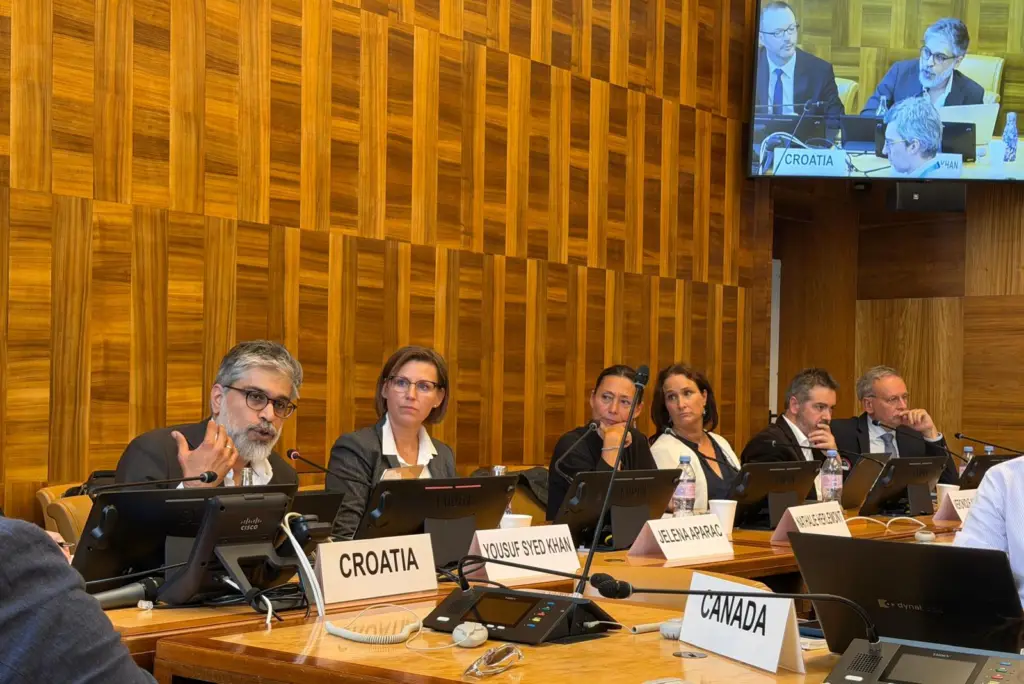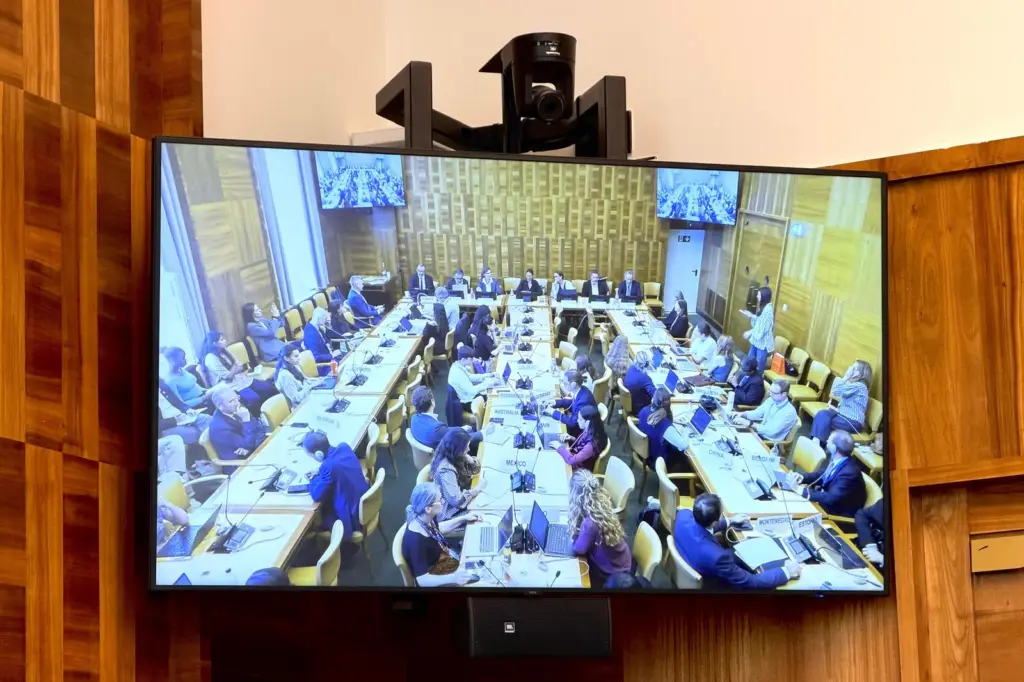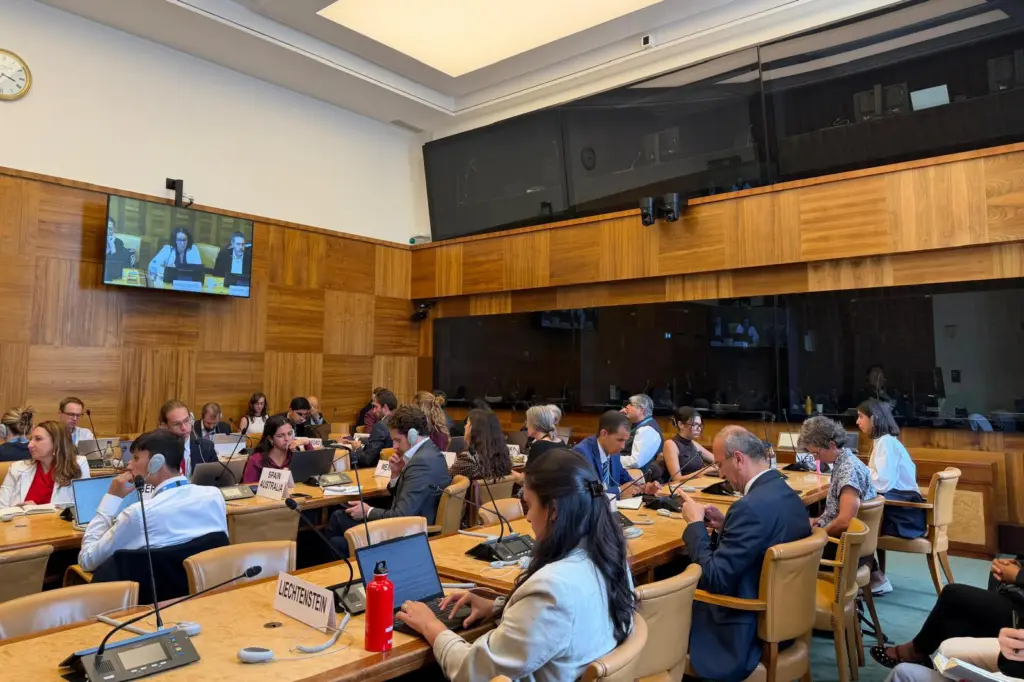
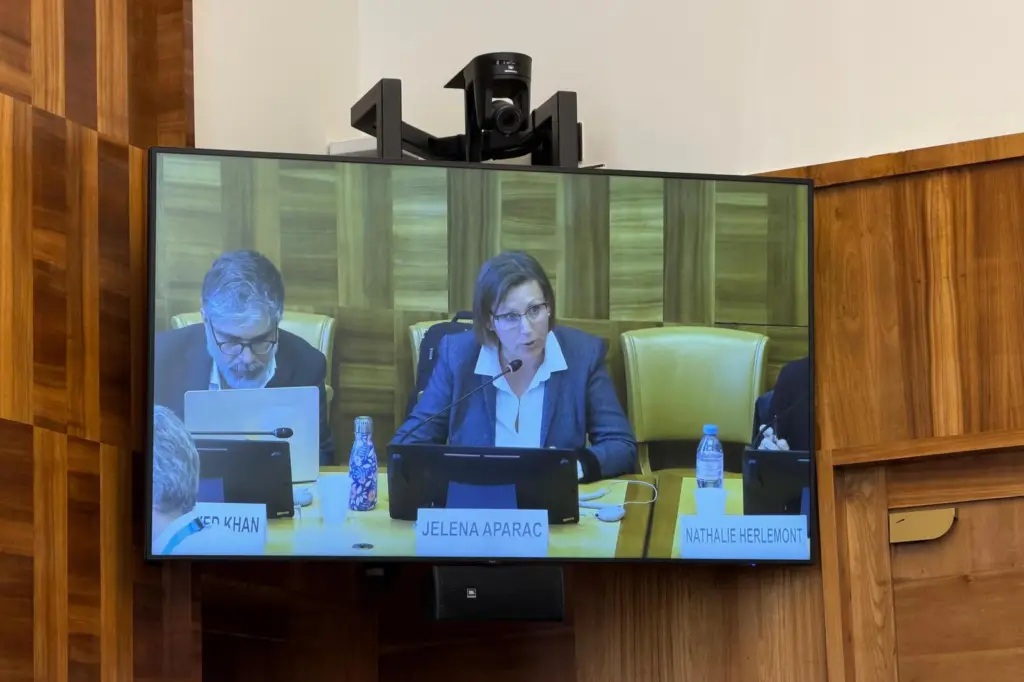
Geneva School of Diplomacy Professor and Senior Academic Programme Coordinator, Dr Jelena Aparac contributed to the Human Rights Council side event “Facts Matter: Truth, Trust and Upholding International Humanitarian Law,” held at the Palais des Nations in Geneva on 28 September 2026.
Co-sponsored by the Permanent Missions of Croatia and Canada, the discussion brought together legal experts, investigators and humanitarian practitioners to consider how credible fact-finding can protect civilians, support accountability and strengthen respect for international humanitarian law.
From Evidence to Prevention
Dr Aparac brought a prevention-focused perspective to the discussion, examining how independent and impartial fact-finding can contribute to the protection of people affected by armed conflict.
When accounts of a conflict are contested, credible findings can establish a reliable basis for understanding events and clarifying the legal obligations of those involved. Their value, however, extends beyond documenting past violations.
Dr Aparac highlighted the importance of connecting fact-finding with practical engagement. When used alongside good offices, reliable findings can create space for dialogue, encourage compliance and help identify measures capable of reducing further harm. This approach complements accountability while ensuring that prevention remains central to international action.
Strengthening the Role of the IHFFC
Her intervention also addressed the potential of the International Humanitarian Fact-Finding Commission. Dr Aparac emphasised the importance of making the Commission’s mandate more widely understood and ensuring that States are aware of the assistance it can provide.
An independent, impartial and accessible Commission can help connect evidence with constructive engagement when its consent-based mandate is activated. Strengthening awareness of this mechanism could enhance its contribution to compliance with international humanitarian law and the prevention of future violations.
A Timely International Discussion
The event featured a keynote contribution from Christopher Lockyear, Executive-in-Residence at the Geneva Centre for Security Policy and former Secretary General of Médecins Sans Frontières.
Moderated by Dr Nathalie Herlemont, Executive Director of the Geneva Academy of International Humanitarian Law and Human Rights, the panel also included Vincent Bernard, Yousuf Syed Khan and Véronique Aubert Bell.
The discussion examined the relationship between evidence, protection, accountability, dialogue and humanity at a time when established facts are increasingly disputed in armed conflicts.
Dr Aparac’s participation reflects GSD faculty engagement in international policy discussions taking place across Geneva and the School’s continuing commitment to connecting legal expertise with the practical challenges facing contemporary diplomacy.