Since late August and early September of this year, 2026, the Middle East and the Gulf region, and indeed the entire world, began witnessing a new round of escalation in the U.S.-Israeli war against Iran, after almost one month of relative calm in military operations. The situation remains fluid, and there does not appear to be a clear and consistent pattern in the development of events that would allow either the course of military operations or the peaceful settlement options to be predicted.
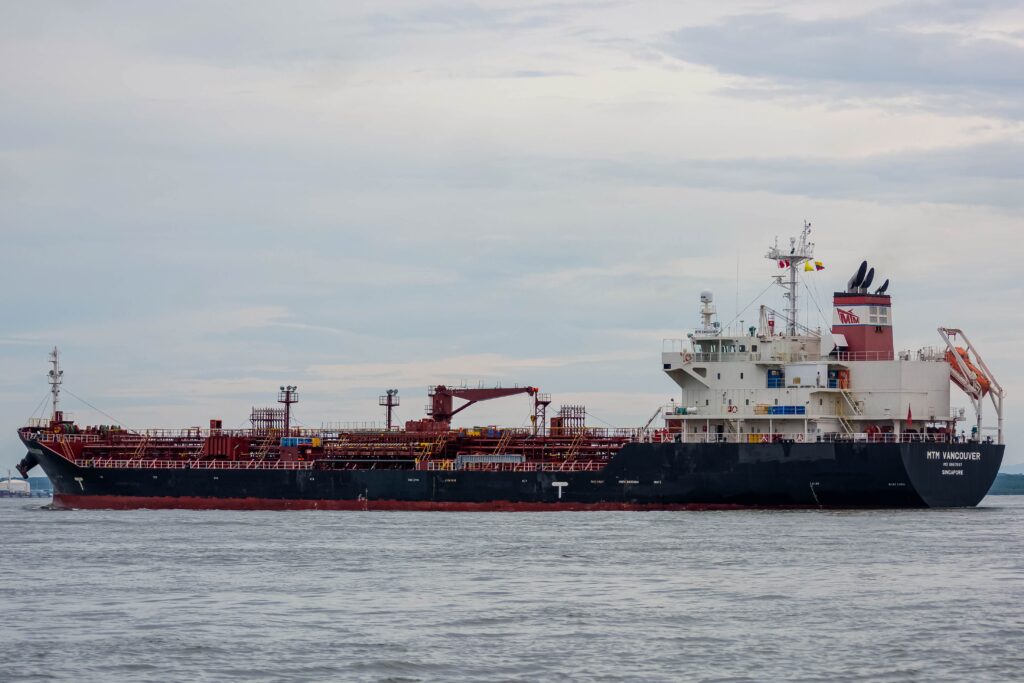
Perhaps one of the most important developments at present is undoubtedly the resumption of almost daily direct military attacks between the United States and Iran. Washington has carried out new military strikes against Iranian targets, including, among others, missile-launch facilities and radar installations on Lark Island in the Strait of Hormuz, in addition to renewed threats to bomb Iran’s infrastructure facilities. According to the U.S. administration, the stated justification for these attacks was that the strikes were intended to prevent Iranian attacks on U.S. forces and bases deployed throughout the region, as well as attacks on commercial vessels, particularly in or near the Strait of Hormuz, that is, within its vital maritime sphere. They were also intended to prevent Iran from being able to rebuild its military capabilities, particularly its missile and radar capabilities. In addition, the attacks were meant to constitute a line of support for the maritime blockade the U.S. army has been trying to impose on Iran, as far as the Strait of Hormuz is concerned.
Iran, for its part, responded with missile and drone attacks against U.S. positions in the region, including, for example, military bases in Bahrain, Jordan and Kuwait. Official statements issued by those countries indicated that some of the missiles launched from Iran had been successfully intercepted. Iran also threatened to continue its response and potentially escalate it further. Most recently, photos revealed demonstrated the huge amount of destruction caused by Iranian attacks on several American military bases in the region, although the exact amount of human casualties and material damages are not known yet.
However, apart from the resumption of the escalation in reciprocal military operations between Washington and Tehran, the struggle for the control of the Strait of Hormuz has effectively become the most important front in the ongoing war. In practical terms, it is the factor with the greatest impact on the interests and economies of the rest of the world’s countries. This represents a success for the Iranian side by adding this card to the conflict’s existing array of leverage. However, Iranian exports and imports have begun recently to severely suffer due to the American maritime blockade imposed on Iran from the side of the Strait of Hormuz. Oman and other regional states continue to participate in efforts to manage maritime traffic and facilitate diplomatic efforts aimed at preventing any restrictions on the freedom of commercial navigation and at establishing credible guarantees for that freedom.
The situation has become only more complicated, not only for the U.S., but also to many other countries of the world, with the recent military advancement and victories achieved by the pro-Iranian Houthi militias in Yemen, which are clearly directed towards the control of the entrance of Bab Al-Mandab Strait. This development added a new reason of concern regarding freedom of navigation, the cost of shipping, insurance and many other related matters. This strategy, definitely elaborated in close coordination with the Iranian side, which has been employing one of their important regional allies, also included intensive attacks by the Houthis on Saudi targets and overall American targets in the region.
Although the current situation appears to favour the logic of war and military confrontation, the diplomatic option has not completely collapsed. It is certainly facing a serious crisis and major challenges, however. Iranian President Masoud Pezeshkian has expressed Iran’s willingness to return to negotiations, and perhaps to revive the ceasefire framework that emerged earlier this year, if the U.S. would honour the “understandings of Islamabad”. U.S. President Donald Trump, for his part, has expressed considerable scepticism about the possibility of reaching a new agreement between the U.S. and Iran. Two points should be taken into account here: on the Iranian side, President Pezeshkian is not the ultimate and final decision-maker on vital strategic issues; and on the American side, President Trump has accustomed us to rapidly, and sometimes surprisingly, changing his views and positions since the beginning of this war, at times moving from one extreme to the other.
Nevertheless, the differences between the American and Iranian sides remain enormous and deep, and the positions of the two parties remain far apart. Washington wants Tehran to commit to permanently ceasing its threats against U.S. forces and bases, as well as to completely refrain from threatening maritime navigation, whether directly in the Strait of Hormuz or indirectly through threats by the Houthi militias in Yemen to freedom of navigation in the Red Sea. In addition, the U.S. administration is clearly conditioning any agreement on Iran’s acceptance of the restrictions Washington is demanding on Iranian military capabilities, whether in the field of ballistic missiles or otherwise, as well as the dismantling of Iran’s nuclear program and Iran’s relinquishment of the quantities of highly enriched uranium currently in its possession. In addition, Washington is keen to continue pressuring Tehran to bring to an end its support to politico-military organizations that constitute its allies in the region, whether in Iraq, Lebanon, Palestine or Yemen.
On the other hand, Tehran insists on the lifting of the U.S. blockade imposed on its ports and the ban on ships and maritime tankers entering or departing from them through the Strait of Hormuz. It is also demanding compensation for the enormous material and human losses and damages it has suffered as a result of the U.S.-Israeli war against it since February 28, 2026. Iran also seeks serious and internationally credible guarantees that U.S. and Israeli attacks against it will not resume. Iran is maintaining what it considers to be its own selective closure of the Strait of Hormuz, as a symbol of its continued control, or at least significant say, of the Strait, and has continued to occasionally target vessels belonging to states hostile to Iran.
It is also firmly established that there are differences within each camp regarding the positions taken, although it is not possible to determine precisely the scale of these differences and, consequently, their impact on each side’s internal cohesion and final decisions. In the Iranian case, there is extensive discussion in American, Israeli and Western circles about the hard-line position of Iran’s Islamic Revolutionary Guard Corps (Pasdaran) compared with a degree of flexibility and moderation on the part of Iranian President Masoud Pezeshkian and Iranian Foreign Minister Abbas Araghchi. On the other side, reports frequently continue to refer to differing positions held by U.S. Vice President Vance. In addition, the resignations that occur from time to time, particularly within the U.S. military, security and intelligence establishments, especially since the beginning of the war, including recently that of Daniel Driscoll following an escalating dispute with the U.S. Secretary of Defence, suggest reservations, and perhaps objections, from voices within those institutions, whether concerning the war in general or the manner in which it is being conducted.
If we return to the nuclear issue, which was supposedly the primary reason Washington and Tel Aviv launched the war against Iran in the first place, it remains a strategic matter that is still far from being resolved. The International Atomic Energy Agency reported that it continues to lack access to key Iranian nuclear facilities following the latest U.S.-Israeli attacks. Prior to those attacks, Iran had accumulated approximately 440.9 kilograms of uranium enriched to 60% or more, according to the latest figures reported by the International Atomic Energy Agency. The Agency now lacks sufficient information to determine exactly what happened to this material. This constitutes a major crisis, and even if the U.S., Israel and Iran ultimately end the war, there is currently no internationally credible mechanism acceptable to both the American and Israeli sides, under their current governments, for verifying the present status of Iran’s nuclear stockpile and nuclear facilities.
Another issue highlighted by developments over the past few weeks is that, from a superficial perspective and without a deeper examination of the underlying circumstances, the current escalation appears to be primarily American-Iranian. In reality, however, Israel remains deeply involved in the war. What may be taking place is a division of roles between Washington and Tel Aviv, with the former focusing on confrontation with Iran while the latter continues its military operations as part of the broader regional conflict, particularly in Lebanon and the Gaza Strip. The current situation, however, does not rule out the possibility of Israel returning to direct military confrontation with Iran, as Israeli Prime Minister Benjamin Netanyahu recently indicated. Netanyahu went as far as threatening the Iranian side by stating that any Iranian targeting of Israel would result in an Israeli response that would bring about the end of the current regime in Tehran.
It is important here to recall that the temporary ceasefire subsequently brokered by Pakistan earlier reduced the intensity of the fighting but did not bring it to a complete halt. This demonstrated that it was a fragile agreement, particularly because it was neither accompanied nor followed by a permanent political settlement of the conflict between the parties or by efforts to address its root causes. Fighting, therefore, resumed and its intensity increased intermittently, sometimes substantially, without it being clear whether the party initiating an escalation was seeking to transition once again to a broad and comprehensive full-fledged war, or merely to increase pressure on the other side to force it to accept its demands, keep it in a permanent state of attritional warfare, and increase the leverage available against it. Although the war has not definitively ended, either in practice or formally, in its current state it can be regarded as a war of attrition, or as an unstable and non-permanent ceasefire.
At the present moment, there are numerous risks. The first is an increase in the intensity, expansion in scope and diversification of targets of U.S. strikes against Iran, including their extension to the civilian infrastructure and more energy-sector facilities. The second risk is an escalation and expansion of Iranian attacks on U.S. bases in the region, including their extension to more countries in the region or even beyond it. The third risk is a complete closure of the Strait of Hormuz, or even a more severe and broader closure than the current situation, together with a closure, totally or partly, of Bab Al-Mandab Strait. This would inevitably lead to astronomical increases in the prices of oil, food and many other essential products, as well as a massive rise in global shipping and insurance costs, with all the catastrophic consequences that this would entail for the global economy and, consequently, for most of the world’s national economies. The fourth risk is that Israel could become more directly involved in the current U.S. reciprocal attacks with Iran. The final risk addressed here is the involvement of additional countries and groups in the ongoing fighting, which would expand its geographical scope and make it more difficult to contain or bring to an end in the future. This risk is currently growing with the increasing escalation by the Houthi militias in Yemen, whether towards the control of Bab Al-Mandab Strait or towards targeting Saudi Arabia.
In conclusion, it is clear that the U.S.-Israeli war against Iran has entered an extremely dangerous phase, and that the most urgent issue in the war at present is freedom of navigation, whether through the Strait of Hormuz or through Bab Al-Mandab Strait, as well as the measures, conditions and requirements for reopening the Strait of Hormuz fully to free international commercial navigation, without neglecting the original issue underlying this war: Iran’s nuclear program and whether the American and Iranian sides can reach a political settlement regarding it.
At present, it is certain that none of the parties to the war has achieved a decisive victory, which certainly works to the advantage of the Iranian side. The latest military escalation between the American and Iranian sides also appears to make reaching a sustainable ceasefire extremely difficult, although certainly not impossible.
Last but not least, we must not forget that the outcome of the ongoing war between the U.S. and Israel against Iran, whether through continuation, escalation, renewed ceasefire or a decisive settlement, will no doubt have a significant impact on the results of the U.S. congressional midterm elections scheduled for early November 2026, for both political and economic reasons.